
Global Tungsten Price Surge: What It Means for the Diamond Tool Industry
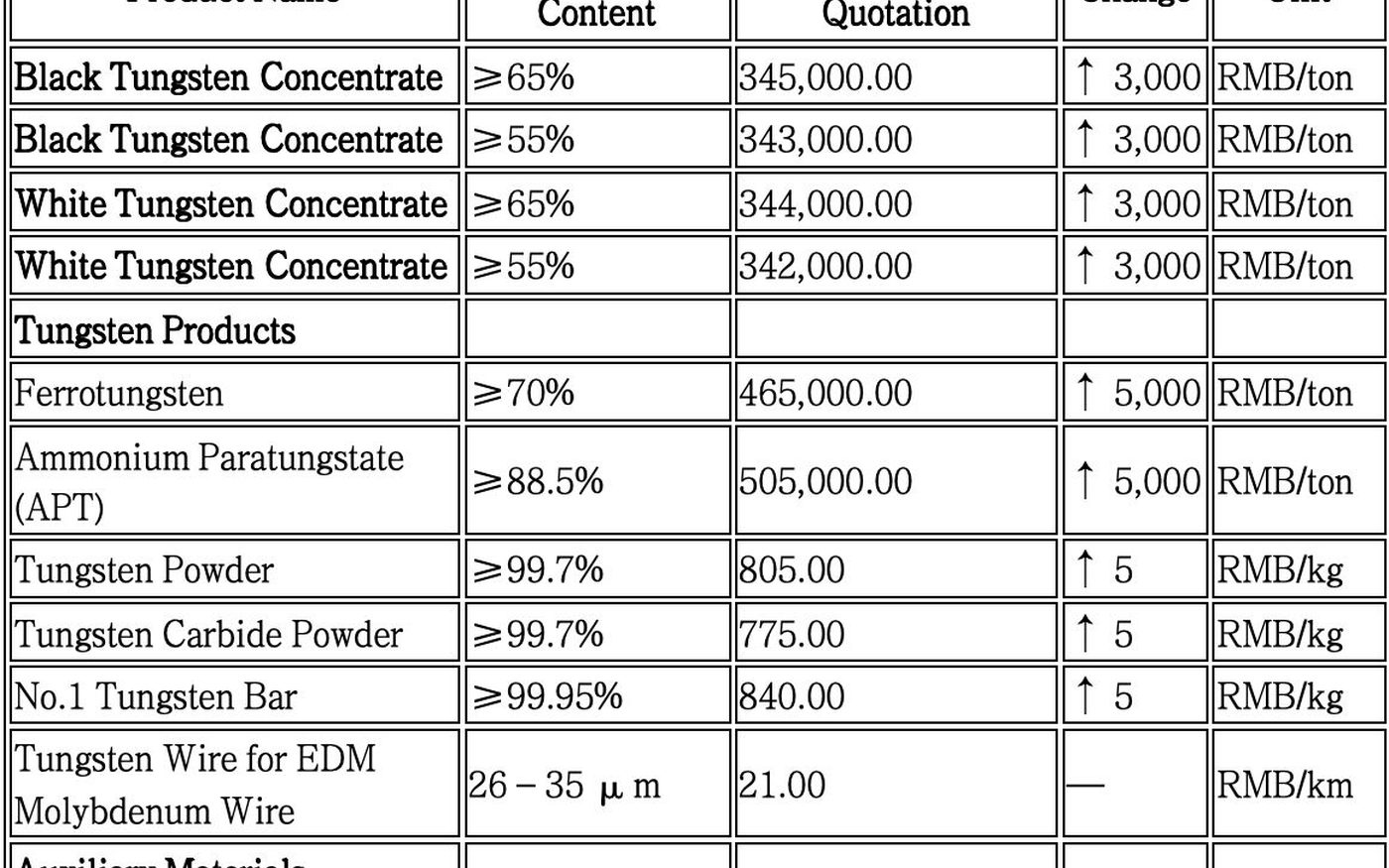
Global Tungsten Price Surge: What It Means for the Diamond Tool Industry On December 2, 2025, the latest Zhongtung Online pricing update showed a continued rise across major tungsten raw materials and intermediate products. From tungsten concentrates to tungsten carbide powders, the upward trend is becoming more evident—reflecting tight supply, sustained demand, and increasing production costs within the global market.
Key Price Highlights Black tungsten concentrate (≥65%) rose by RMB 3,000/ton White tungsten concentrate (≥65%) increased by RMB 3,000/ton Ferrotungsten up by RMB 5,000/ton APT (Ammonium Paratungstate) increased by RMB 5,000/ton Tungsten powder & tungsten carbide powder both rose by RMB 5/kg These price shifts reflect not only raw material tightening but also higher mining costs, environmental protection pressure in production regions, and increasing downstream demand from hard alloy, energy, military, and semiconductor sectors.
Why Tungsten Prices Matter to the Diamond Tool Industry Tungsten—and especially tungsten carbide—is one of the core raw materials in the manufacturing of diamond tools. It affects a wide range of products: Diamond segments Core drill bits Stone cutting blades Saw wires & beads Mining tools and inserts Concrete and demolition tools
1. Rising Tungsten Costs Directly Increase Production Costs For diamond tool factories, tungsten carbide powder is a major contributor to segment formulation and tool performance. Even a small increase—such as RMB 5/kg —can translate into noticeable cost pressure when scaled across: Millions of segments per year High-volume production lines
Export-driven pricing structures Producers with thin margins will feel the squeeze first. 2. Potential Upward Pressure on Diamond Tool Prices If tungsten continues its rising trend, manufacturers may consider adjusting price lists for: Laser welded blades Core drills Multi-wire & mono-wire beads High-performance cutting segments
Mining bits and carbide-inserted tools International buyers—especially those in stone, construction, and mining industries—should expect possible price fluctuations in Q1–Q2 2026. 3. Technology Optimization Will Accelerate Cost pressure often drives innovation. To offset rising tungsten prices, factories are likely to: Reduce tungsten percentage in segment formulas
Use higher-efficiency metal binders Improve sintering processes Adopt advanced cold-press and hot-press technologies Increase tooling efficiency to justify higher prices This could accelerate the industry’s shift toward: High-end matrix formulations Longer-life diamond segments Smarter tool design for greater cutting efficiency
4. Competitive Pressure Among Manufacturers Will Intensify Larger factories with stable raw material contracts may maintain price stability longer, gaining a competitive edge. Smaller and mid-sized producers may face: Cash flow pressure Reduced profitability Need for quicker product value upgrades This may speed up industry consolidation, with stronger manufacturers gaining market share.
5. Export Markets May See Short-Term Volatility Diamond tool exporters will need to: Update quotations more frequently Rebalance profit margins Negotiate with overseas distributors on cost impact Strengthen communication to avoid price surprises Regions especially sensitive to price changes include: Middle East Turkey India
Brazil Southeast Asia What Buyers Should Do Now To mitigate the impact of fluctuating tungsten prices, tool buyers can consider: Locking in advance purchase orders Negotiating quarterly pricing instead of annual Comparing tungsten-content formulas from different suppliers Exploring alternative product grades for non-critical applications
Working with suppliers who offer stable raw material sourcing Looking Ahead: A More Dynamic 2026 The tungsten price adjustment signals a more dynamic market outlook for 2026. For the diamond tool industry, this brings both challenges and opportunities: Cost pressure will push factories toward better technology High-performance segments and tools will see stronger demand
Market consolidation will accelerate Export pricing strategies will need more flexibility In short, rising tungsten prices may reshape the competitive landscape—but they will also encourage the industry to move toward higher precision, longer tool life, and better performance.