
How to Optimize Pulley Arrangement, Wire Length and Machine Selection for Block Trimming
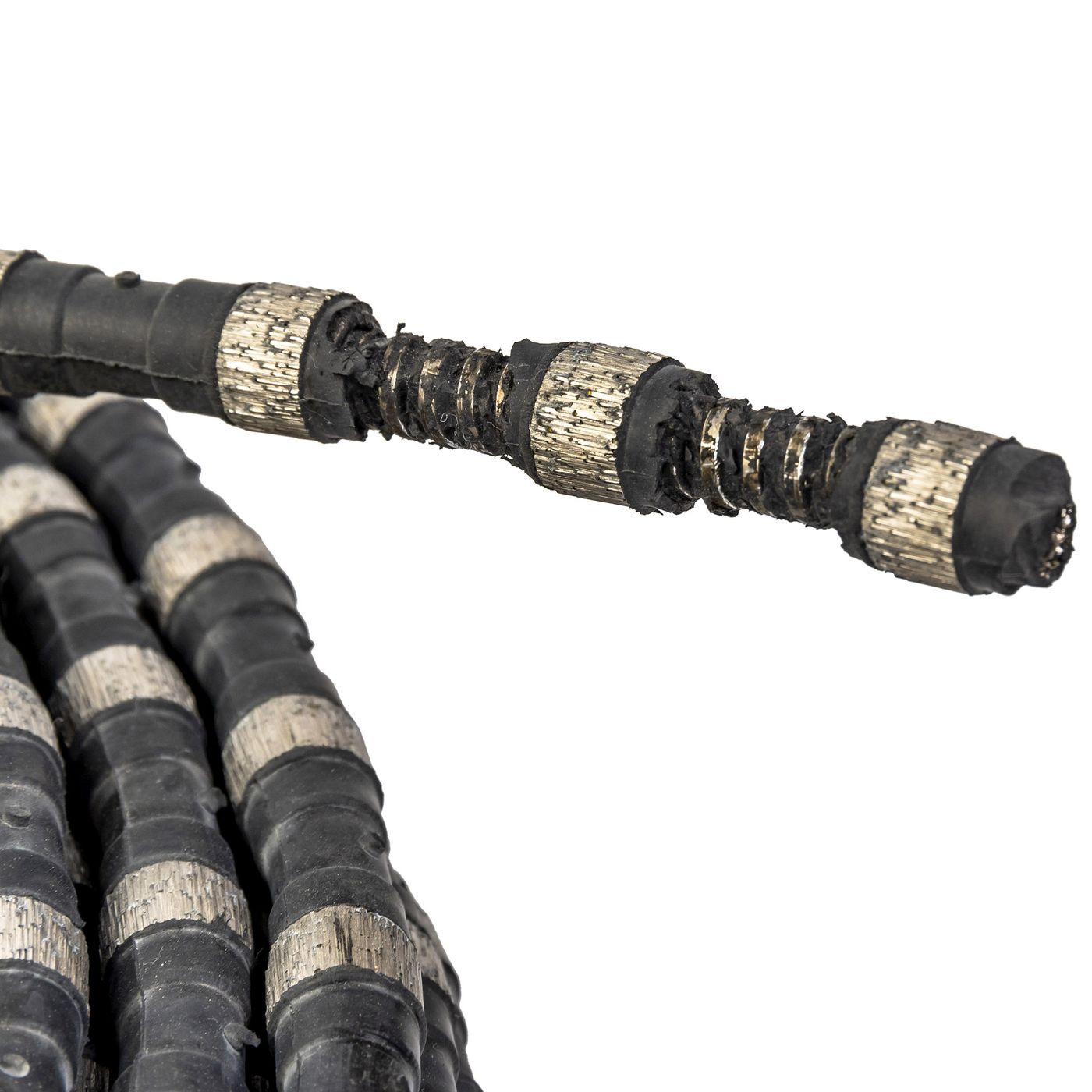
Diamond Wire Block Trimming: How to Optimize Pulley Arrangement, Wire Length and Machine Selection A practical guide to pulley configuration, diamond wire length, machine selection and cutting efficiency in stone quarry block trimming Block trimming and squaring are important operations in natural stone quarries. After a primary block is extracted, additional cuts are often required to remove irregular sections, square the block, correct its dimensions, or prepare it for transportation and further processing.
Although diamond wire quality and wire saw performance are critical, the overall cutting system—including machine power, wire length, pulley arrangement, cutting geometry, tension and cooling—also has a significant influence on productivity, cutting accuracy and diamond wire life. 1. Establish the Cutting Geometry First
Before positioning the wire saw or pulleys, clearly define the required trimming line and cutting plane on the stone block. he machine and pulley system should then be arranged around the required cutting geometry. A practical sequence is: Define the cutting plane → Position the machine → Arrange the pulleys → Install the diamond wire → Check alignment and tension
The objective is to create the shortest practical and smoothest possible wire path while maintaining adequate clearance around the block. The block dimensions, required trimming position, machine location and available working space should all be considered before determining the final pulley arrangement. 2. Correct Guide and Deviation Pulley Arrangement
Guide and deviation pulleys are used to redirect the diamond wire and position the cutting section accurately along the required cutting plane. A typical arrangement can be represented as: Wire Saw → Guide/Deviation Pulley → Cutting Section → Guide/Deviation Pulley → Return to Machine The exact number and position of the pulleys will depend on the application.
Key principles for pulley arrangement A good pulley system should: · Keep the wire path as simple as practical · Avoid unnecessary changes of direction · Maintain adequate clearance around the block · Keep each pulley correctly aligned with the wire path · Allow the wire to sit naturally in the pulley groove · Provide stable support for every pulley
· Minimize unnecessary bending and side loading More pulleys do not necessarily mean better cutting performance. The objective is to use the minimum practical number of pulleys required to achieve the desired cutting geometry safely and accurately. Poor pulley alignment can cause lateral loading, vibration, unstable wire tracking, pulley groove wear and uneven diamond bead wear.
The pulley should guide the wire smoothly—not create additional resistance or side loading. 3. Why Approximately 30 m of Diamond Wire? For the block-trimming configuration described in this guide, an approximately 30 m working length of diamond wire provides a practical balance between cutting geometry and wire movement.
The wire needs sufficient length to work effectively around the block and through the pulley system. A suitable working length provides enough room for the wire to: · Move effectively through the complete system · Rotate naturally during cutting · Distribute wear more evenly around the diamond beads · Reduce the tendency for one-sided bead wear
· Reduce the development of pronounced wear flats The objective is therefore not simply to use the shortest possible wire loop. The wire needs sufficient working length to operate and rotate effectively within the complete cutting system. The approximately 30 m recommendation is a practical guideline for this type of setup. The final wire length should always be checked against the actual machine configuration, pulley arrangement and block dimensions.
4. Natural Wire Rotation and Bead Wear Diamond wire is designed to rotate during cutting, allowing the diamond beads to wear more uniformly around their circumference. The pulley configuration and wire length should therefore allow the wire to rotate naturally without unnecessary restriction or lateral loading. This is particularly important when cutting hard and abrasive stones such as granite and quartzite.
The desired operating principle is: Natural wire rotation → More uniform bead wear → Better wire utilization → More consistent cutting performance With an approximately 30 m working length, the wire has sufficient space to work and rotate through the system, giving the beads a better opportunity to wear evenly. This can help reduce the tendency for the beads to become worn or flattened predominantly on one side.
If obvious one-sided wear flats develop on the beads, the complete cutting setup should be reviewed, including: · Pulley alignment · Wire tension · Wire rotation · Wire length · Cutting conditions · Diamond wire specification 5. Selecting the Right Wire Saw Machine Machine power should be matched to the intended block-trimming application.
For the configuration discussed in this article, a 37kW wire saw machine provides a practical balance between cutting productivity, machine flexibility and operating cost. Under suitable stone, diamond wire and operating conditions, a practical productivity target is approximately: 6 m²/hour Actual productivity will vary according to:
· Stone type and abrasiveness · Block dimensions · Cutting depth · Diamond wire specification · Wire condition · Machine parameters · Water cooling · Cutting geometry 18.5kW and 22kW Mini Wire Saws Smaller 18.5kW and 22kW mini wire saw machines are particularly suitable for localized cutting operations, such as sawing or trimming the heads of blocks.
For more productive block trimming and squaring, a 37kW machine provides greater cutting capacity and operational flexibility. Another advantage of using a 37kW machine is its versatility within the quarry. When there is no block available in the block-squaring yard, the machine can be moved to other cutting applications. This allows the quarry to make better use of the equipment instead of keeping a machine dedicated to the trimming area when there is no immediate work.
6. Maintain a Suitable Wire Bending Radius Diamond wire repeatedly passes around the pulleys during cutting. Unnecessarily tight turns should therefore be avoided. The appropriate pulley diameter should be selected according to the actual: · Diamond wire construction · Bead diameter · Cable construction · Rubber or plastic assembly
· Application conditions There is no single universal pulley diameter suitable for every type of diamond wire. The pulley specification should be matched to the particular wire construction and application. A smooth bending path helps minimize unnecessary mechanical stress and supports stable wire operation. 7. Check Pulley Alignment, Tension and Machine Stability
Correct pulley alignment is essential for stable wire movement. The wire should enter and leave each pulley in a direction compatible with the pulley groove. Excessive lateral angles can create side loading and cause the wire to run against one side of the groove. This can lead to: · Unstable wire tracking · Increased vibration
· Excessive pulley groove wear · Premature rubber or plastic wear · Uneven bead wear · Increased wire consumption Before starting the cut, check: · Machine stability · Wire tension · Pulley alignment and support · Wire seating in every pulley groove · Natural wire rotation · Clearance around the block · Cutting-plane alignment
· Cooling-water supply · Pulley and bearing condition If excessive vibration, lateral wire movement or abnormal bead wear occurs, stop the operation and inspect the complete wire path before continuing. 8. Typical Block-Trimming Productivity With the recommended 37kW wire saw and properly configured pulley system, approximately 6 m²/hour can be used as a practical productivity target under suitable operating conditions.
Based on typical quarry operation, a large production block can be cut along the side/length in approximately 30 minutes, depending on the actual block dimensions, stone characteristics and cutting conditions. This demonstrates an important principle: Productivity does not come from machine power alone. The machine, diamond wire, wire length, pulley geometry, tension, cooling and cutting conditions must work together as one integrated cutting system.
9. Common Pulley and Wire Setup Problems Problem Possible Cause Possible Result Wire moves sideways on pulley Poor pulley alignment Unstable wire tracking Excessive wire vibration Poor geometry, tension or alignment Reduced cutting stability One-sided bead wear or wear flats Restricted rotation or unsuitable wire path Reduced effective wire life
Slow cutting Insufficient machine capacity or unsuitable operating conditions Lower productivity Excessive rubber/plastic wear Side loading or misalignment Premature wire damage Cutting line deviation Unstable wire path or pulley movement Poor block accuracy Pulley groove wear Excessive side loading or incorrect wire path
Reduced pulley service life Poor wire life Incorrect wire length, rotation, tension or cutting conditions Increased operating cost 10. Practical Block-Trimming Checklist Before starting the diamond wire saw, check the following: · Cutting line: Confirm the required trimming position. · Cutting geometry: Confirm the required cutting direction and plane.
· Machine selection: Ensure the machine is suitable for the required productivity. · Wire length: For this setup, use approximately 30 m of diamond wire as a practical working length. · Pulley arrangement: Use the minimum practical number of guide and deviation pulleys. · Pulley alignment: Ensure every pulley is correctly aligned with the wire path.
· Wire seating: Confirm that the wire is properly seated in every pulley groove. · Wire tension: Check that tension is appropriate for the machine and wire. · Wire rotation: Ensure the wire can rotate naturally. · Clearance: Check clearance between the wire, block and surrounding equipment. · Cooling: Confirm sufficient cooling water reaches the cutting area.
· Machine stability: Make sure the machine and pulley supports are securely positioned. · Pulley condition: Check grooves, bearings and supports before operation. Matching the Complete System for Better Results Efficient diamond wire block trimming is not determined by the diamond wire or wire saw machine alone. The best results come from matching:
Machine Power + Diamond Wire + Wire Length + Pulley Arrangement + Cutting Geometry + Tension + Cooling For the block-trimming configuration discussed in this guide: 37kW Wire Saw Recommended for productive and flexible block trimming, with approximately 6 m²/hour as a practical target under suitable conditions. 18.5 / 22kW Mini Wire Saw
Particularly suitable for block-head trimming and localized cutting work. Approximately 30 m Diamond Wire Provides sufficient working length for natural wire rotation and more uniform bead wear, helping reduce the tendency for one-sided bead wear and wear flats. Correct Guide and Deviation Pulley Arrangement Provides a stable and accurately controlled wire path while minimizing unnecessary bending and side loading.
The objective is not simply to use the most powerful machine or the greatest number of pulleys. The goal is to create a balanced cutting system that delivers stable operation, accurate trimming, good productivity and optimum diamond wire utilization. At KEENOVA, we look at diamond wire cutting as a complete system rather than treating the machine, wire and accessories as separate products.
For each block-trimming application, the setup should be evaluated according to: Stone Type → Block Dimensions → Cutting Geometry → Machine Power → Diamond Wire Specification → Wire Length → Pulley Configuration → Operating Conditions If you are planning a new block-trimming or block-squaring application, share your block dimensions, required cutting position and machine layout with us.
We can help evaluate the appropriate wire saw, diamond wire, working wire length and pulley arrangement for your quarry application. KEENOVA — Diamond Wire Cutting Solutions for Stone Quarries.